Bulk Tannase for Instant Tea Clarity and Polyphenol Control
Instant tea plants do not need vague enzyme promises. They need a controlled way to manage polyphenol behavior across extraction, concentration, drying, and reconstitution.
Enzymeready supplies bulk tannase to instant tea, tea concentrate and ready-to-drink tea manufacturers, and to the ingredient distributors who buy for them. The aim is practical: better extract appearance, lower haze and sediment risk, a less astringent cup, and output that stays closer to target as leaf blends change.
To get a quote, send: your tea type and product format, where haze, cream or astringency shows up, the quantity per order or per month, and the delivery country. Pricing, pack size and lead time are quoted per order.
Request a wholesale tannase quote
Tea cream and astringency in black tea concentrate
Black tea concentrate makers tend to name two problems together: a creamy precipitate, often called tea cream, that settles out of the concentrate, and a heavy astringency in the liquor. A tannase step is one treatment aimed at both at once, applied to the tea liquor during processing.
Tannase works on the tannin fraction of the liquor. In tea beverages and plant extracts it is used to help prevent cold haze, raise extraction yield, hold the colour of the liquor and soften bitterness and astringency.
What this means on the line:
- Check the working window against your process. Fungal tannase grades for tea can work across roughly pH 3.0 to 7.0 and 30 to 60 °C, with the best activity nearer pH 4.0 to 6.0 and 40 to 50 °C. Hot extraction temperatures sit above that window, so the enzyme usually goes in after the liquor has cooled into range, for example in a holding tank before separation. Confirm the window on the datasheet for the exact grade.
- Plan lot sizes around shelf life. Shelf life is typically twelve months, so plan lot sizes around how fast the line uses the enzyme.
Tannase built for practical instant tea outcomes
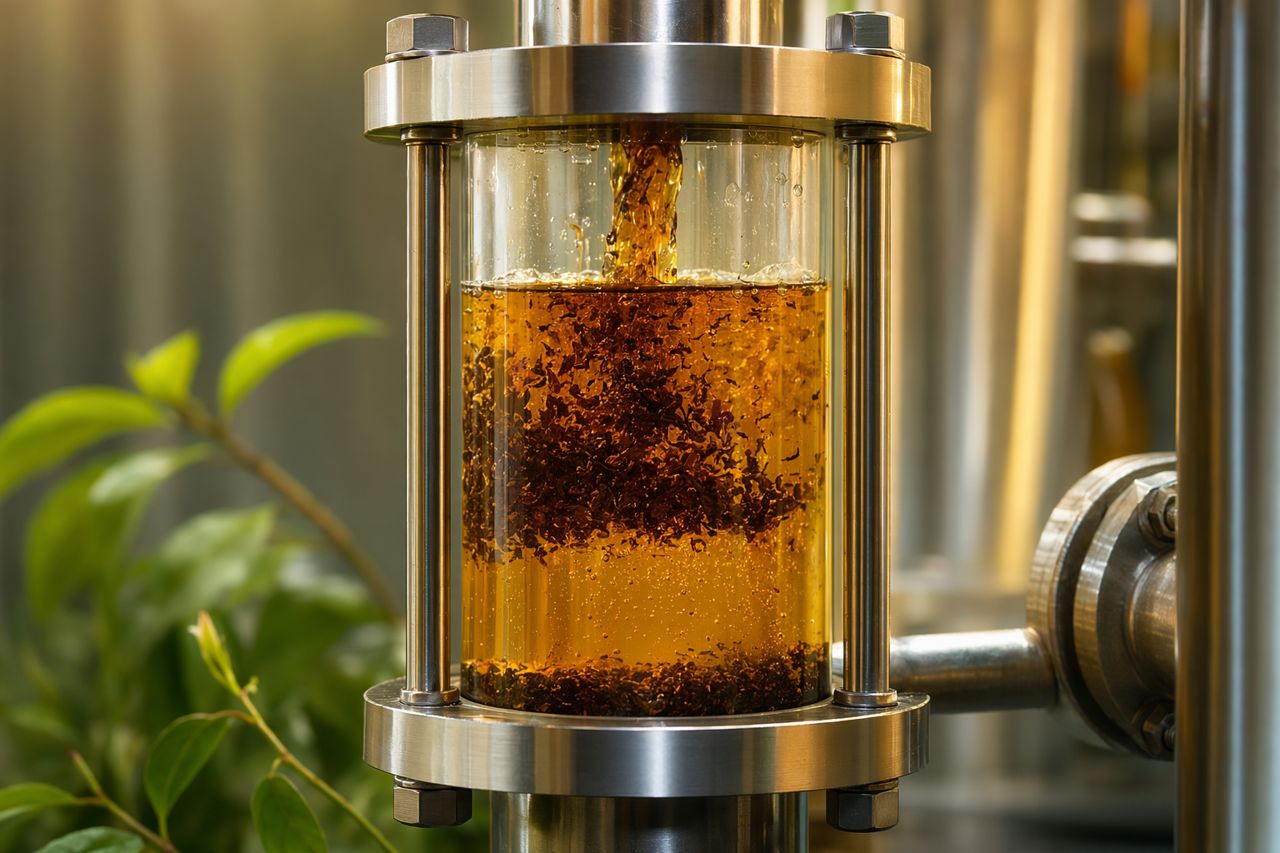
Tea polyphenols are part of the product’s character, but in extraction they can also drive clouding, sediment, cream formation, and inconsistent visual quality. Tannase helps modify gallated polyphenol behavior so the liquor is easier to manage downstream.
For instant tea operations, that can support:
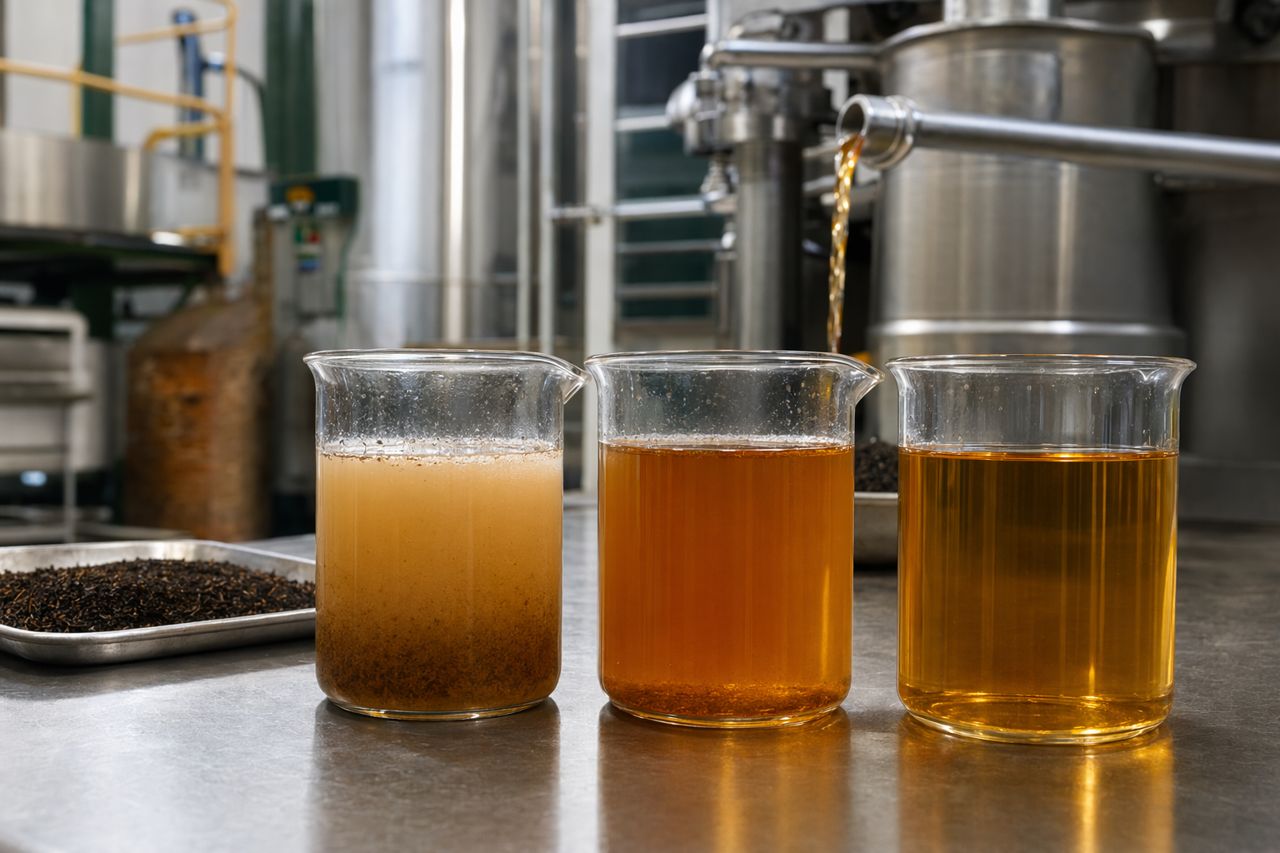
- Clearer extract before concentration
- Lower visible haze and sediment tendency
- More stable appearance after drying and reconstitution
- Improved cold-water solubility performance
- Better control when leaf quality, cut size, or origin changes
- Fewer corrective steps late in the process
Enzymeready works as an enzyme supplier for tea extraction processing with a focus on plant-floor fit: where the enzyme enters, how it behaves inside the available residence time, and what quality gains matter to your final instant tea specification.
Where tannase fits in the extraction line
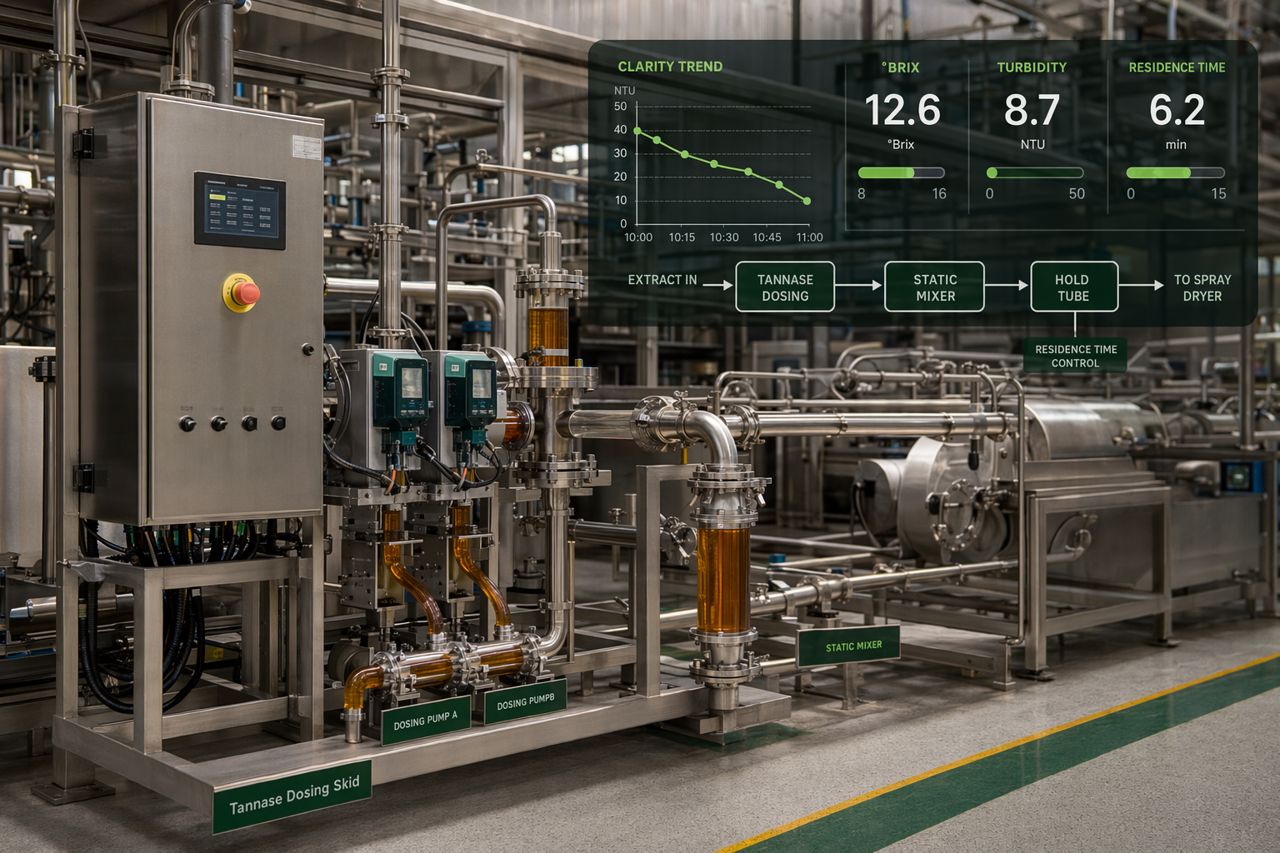
Tannase is typically evaluated where tea solids are already in solution and the process still has enough contact time for polyphenol management before clarification, concentration, or drying.
Common evaluation points include:
- Post-extraction holding
- Inline treatment before separation
- Controlled treatment before evaporation
- Blend-specific correction steps for high-haze extracts
The right point depends on your extraction temperature profile, solids target, residence time, liquor loading, and clarification setup. Enzymeready helps define a practical addition strategy that fits your existing equipment rather than forcing a process redesign.
Designed around the metrics extraction managers track
Tannase selection should connect directly to production outcomes. Enzymeready supports teams looking to improve:
Clarity and visual consistency
Reduce the swing between bright extract and dull, cloudy liquor when raw material changes. Better clarity upstream can also reduce pressure on filtration and separation assets.
Polyphenol control
Manage gallated polyphenol behavior to reduce tea cream and haze formation while protecting the intended tea profile.
Cold-water solubility
Support instant tea powders that reconstitute with fewer visible particles, less clouding, and a cleaner cup appearance.
Throughput protection
When extract is easier to clarify, plants can often reduce rework, limit unplanned holds, and protect the extraction-to-dryer schedule.
Repeatable extraction windows
A controlled tannase step helps absorb natural variability in leaf blends, seasonal lots, and extraction response.
Bulk supply with process support
Enzymeready supplies tannase for B2B production environments where consistency, documentation, and continuity matter. We support procurement and technical teams with:
- Bulk order planning for production campaigns
- Lot-to-lot consistency review
- Application guidance for instant tea extraction plants
- Compatibility discussion around existing process conditions
- Quote support based on annual volume, batch size, and operating schedule
- Documentation packages for internal quality and purchasing review
Our goal is simple: help your team specify tannase in a way that purchasing can source, QA can document, and operations can run repeatedly.
When to evaluate bulk tannase
A tannase trial may be useful if your plant is seeing:
- Haze after extraction or after concentration
- Tea cream during storage or reconstitution
- Variable clarity between leaf origins or blend formulas
- Sediment complaints in cold-water instant tea
- Extra filtration load after high-polyphenol runs
- Rework tied to appearance specifications
- Difficulty holding the same quality window across campaigns
How Enzymeready approaches trials
We start with the process reality, not a generic recommendation. A useful evaluation usually includes:
- Your tea type, blend pattern, and target product format
- Current extraction and separation sequence
- Solids, clarity, and appearance targets
- Known haze or solubility pain points
- Existing hold time and addition opportunities
- Desired supply format and purchasing volume
From there, Enzymeready can recommend a practical tannase option and help your team structure a plant-relevant comparison against your current process.
Request a quote for bulk tannase
If you are sourcing tannase for an instant tea or tea concentrate plant, or buying for resale to one, tell us what you produce, where haze, cream or astringency appears, the quantity per order or per month, and the delivery country.
Use the inquiry form below and Enzymeready will respond with a bulk quote and the next technical questions. Pricing, pack size and lead time are quoted per order.