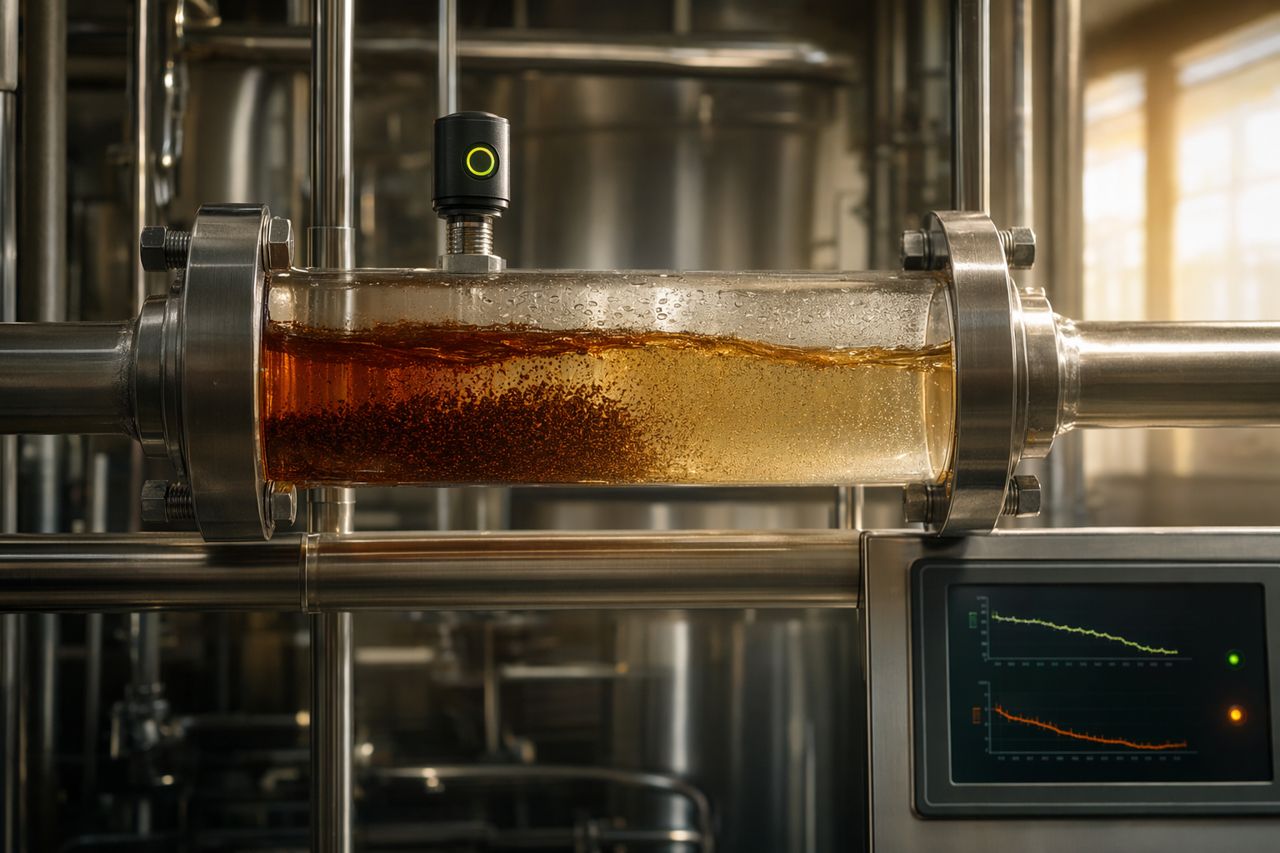
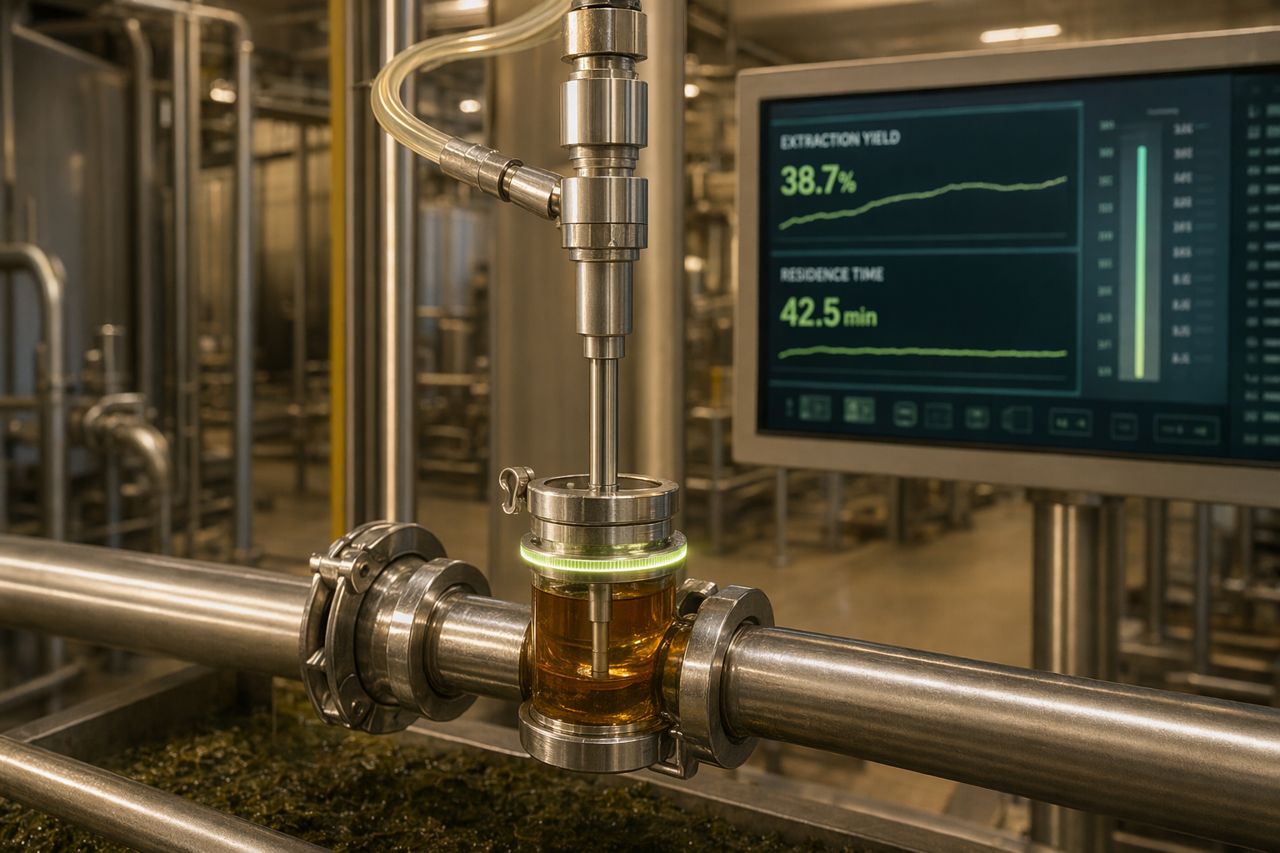
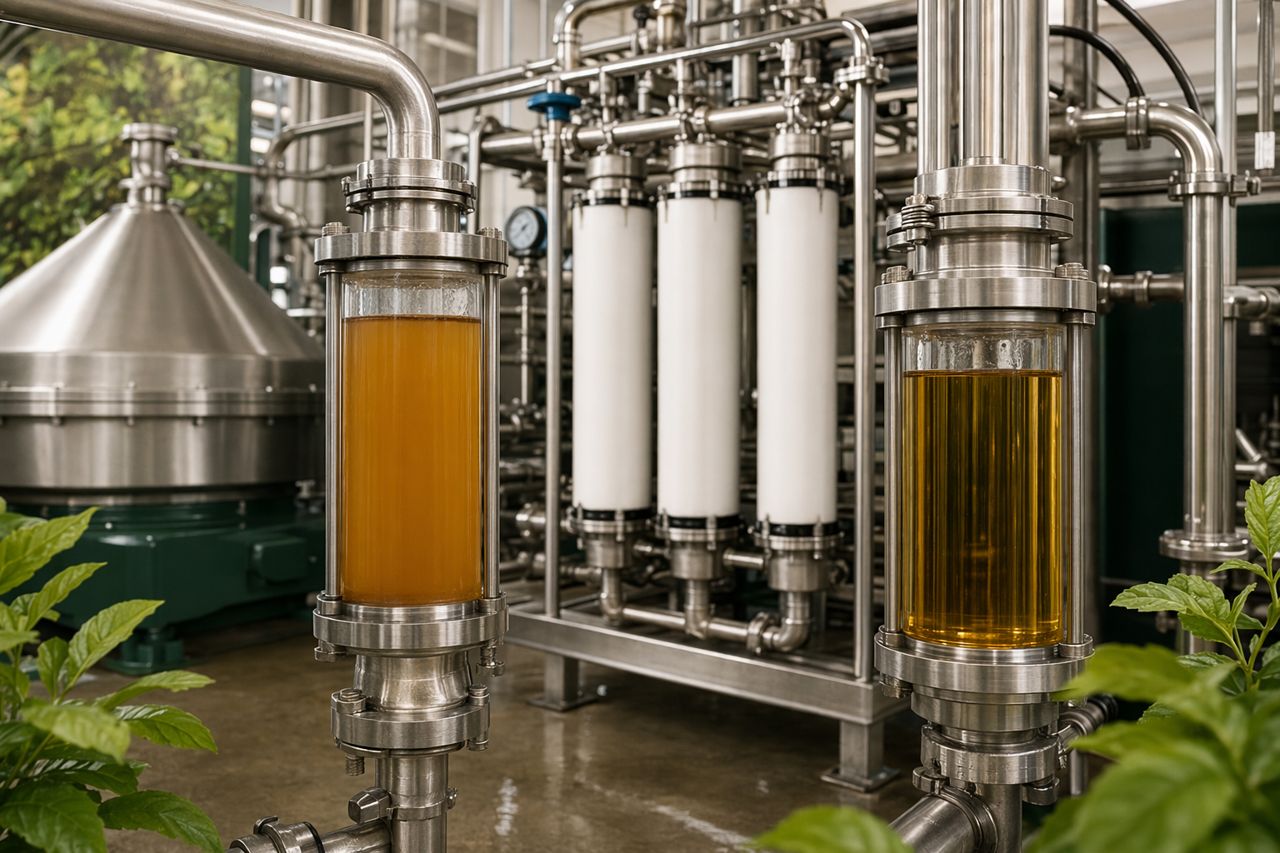
Enzyme supplier for tea extraction processing
Enzymeready supports instant tea extraction plants that need more usable solids from the same leaf input, steadier liquor quality, and less friction through clarification, concentration, and drying.
Our enzyme solutions are selected for practical plant outcomes: improved soluble-solids release, reduced suspended fines, better extract clarity, cleaner filtration behavior, and repeatable extraction performance across changing tea lots.
If your extraction line is limited by yield loss, haze, fouling, slow separation, or inconsistent cold-water solubility, enzyme treatment can become a controlled process lever rather than a trial-and-error additive. We supply in bulk to instant tea, tea concentrate and ready-to-drink tea manufacturers, and to the ingredient distributors and resellers who buy for them.
To get a quote, send: the enzyme or the problem to solve, the quantity per order or per month, the tea type and product format, and the delivery country. Pricing, pack size and lead time are quoted per order.
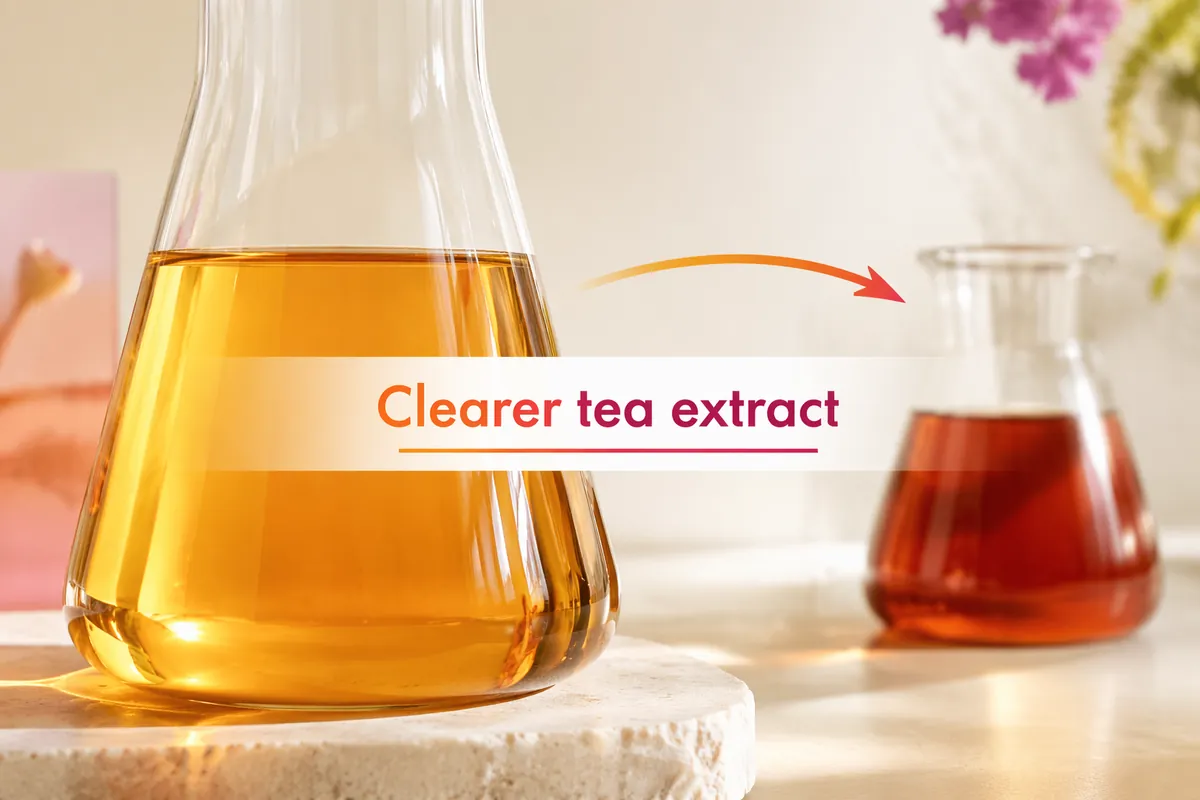
Where enzymes create value in an instant tea line
Instant tea extraction plants work inside a narrow operating window. Leaf grade, cut size, seasonal variation, residence time, temperature profile, and pH all influence how much soluble material can be recovered without dragging excessive fines, pectin, cellulose fragments, or haze-forming compounds downstream.
Enzymeready enzyme systems are designed to fit into this reality.
Typical production goals
- Increase extractable soluble solids from black, green, or blended tea feedstocks
- Improve liquor clarity before centrifugation, membrane filtration, or polishing filtration
- Reduce fine-particle carryover that contributes to fouling and filter pressure rise
- Support cold-water solubility targets for instant tea powders and concentrates
- Stabilize extraction performance when leaf lots change
- Improve throughput by shortening difficult separation steps
- Protect downstream evaporators, membranes, and dryers from avoidable solids burden
Enzyme options for tea extraction processing
Enzymeready supplies enzyme blends based on your feedstock, extract specification, and process constraints. Formulation is selected after we understand the tea type, extraction stage, separation equipment, and quality targets.
Cell wall release support
For extraction managers focused on yield recovery, cell-wall-targeting enzymes can help release soluble tea components trapped in plant structure. This is especially useful when current extraction conditions are already near their practical limit and additional heat or residence time would damage flavor, color, or operating efficiency.
Pectin and gum management
Pectin-like materials and botanical gums can increase viscosity, hold fine particles in suspension, and slow clarification. Enzymeready enzyme programs can be used to reduce this load before filtration or centrifugation, helping the liquor behave more predictably.
Hemicellulose and fiber reduction
Tea leaf structure contains fiber fractions that can contribute to suspended solids and poor extract flow. Targeted enzyme treatment can help break down problematic structural material while keeping the process focused on clean extract recovery.
Tannin and haze control support
For products where clarity, brightness, and cold-water performance are critical, enzyme selection can be aligned with haze-management goals. The objective is not to strip character from the tea, but to reduce process instability that shows up later as clouding, sediment, or solubility complaints.
Built around your extraction window
Enzymeready does not start with a generic enzyme recommendation. We start with the way your plant actually runs.
We review:
- Tea type and blend variability
- Extraction temperature profile
- Residence time and tank configuration
- Slurry solids behavior
- pH range and adjustment limits
- Separation method: decanter, centrifuge, membrane, depth filtration, or combined system
- Target °Brix, turbidity, clarity, and powder solubility
- Downstream concentration and drying constraints
- Current bottleneck: yield, fouling, haze, throughput, or consistency
From there, we recommend a practical enzyme pathway for lab screening, pilot validation, and plant adoption.
What a successful trial should prove
A useful enzyme trial should connect directly to production value. Enzymeready helps define the right comparison points before product is introduced, so your team can evaluate performance against the baseline run.
Trial outcomes to track
- Higher soluble-solids recovery at the same leaf input
- Lower turbidity before final clarification
- Faster separation or reduced filter loading
- More stable °Brix across production lots
- Improved cold-water dispersion and solubility in finished instant tea
- Reduced fouling signals in membranes, filters, evaporators, or heat exchangers
- Consistent sensory profile within your commercial specification
The goal is not a perfect beaker result. The goal is a repeatable plant result that your operators can run, measure, and defend.
Practical integration points
Enzyme treatment can be evaluated at different stages depending on your system design.
Common addition points
- Pre-extraction hydration or conditioning step
- Main extraction vessel
- Recirculation loop
- Holding stage before clarification
- Side-stream treatment for difficult lots
The best point depends on contact time, mixing quality, temperature, pH, and how quickly the treated extract moves into separation. Enzymeready helps you choose a point that improves performance without creating unnecessary process complexity.
Why instant tea plants choose Enzymeready
Plant-floor fluent support
We speak in terms extraction teams use every day: yield recovery, fines behavior, filter life, turbidity, °Brix control, residence time, and solubility. Our recommendations are built for production decisions, not catalog browsing.
Formulation fit, not one-size-fits-all supply
Tea extraction is sensitive to raw material, geography, season, and product format. Enzymeready helps match enzyme chemistry to your operating conditions and finished-product target.
Conversion-focused validation
We help your team design a trial that compares treated and untreated process streams with the measurements that matter to your plant. That keeps the decision grounded in throughput, quality, and cost per unit of extract.
Supply support for repeatable production
Once a program is selected, Enzymeready supports supply planning, packaging preferences, batch continuity, and documentation needs for commercial production.
Applications we support
- Instant black tea extraction
- Instant green tea extraction
- Tea concentrate production
- Ready-to-drink tea extract preparation
- Cold-soluble instant tea powder production
- High-clarity tea extract processing
- Decanter and centrifuge clarification systems
- Membrane filtration and polishing filtration lines
- Plants working with variable tea leaf lots or higher-fines feedstocks
Request a quote for your extraction line
Tell us what your plant is trying to improve: yield, clarity, filtration rate, cold-water solubility, fouling reduction, or batch consistency. Enzymeready will respond with a practical enzyme recommendation path and quote details for your process.
Helpful details to include
- Enzyme or problem, and quantity per order or per month
- Delivery country, and whether you buy for your own plant or for resale
- Tea type and product format
- Current extraction and clarification bottleneck
- Target °Brix and clarity requirement
- Separation equipment used
- Approximate production scale
- Trial timeline and purchasing location
Request a quote
Use the inquiry form below to request bulk pricing, availability and trial support for tea extraction enzymes. Manufacturers and resellers get a quote per order, based on grade, quantity and destination.