Filtration Bottlenecks in Instant Tea Production: From Leaf Fines to Viscosity
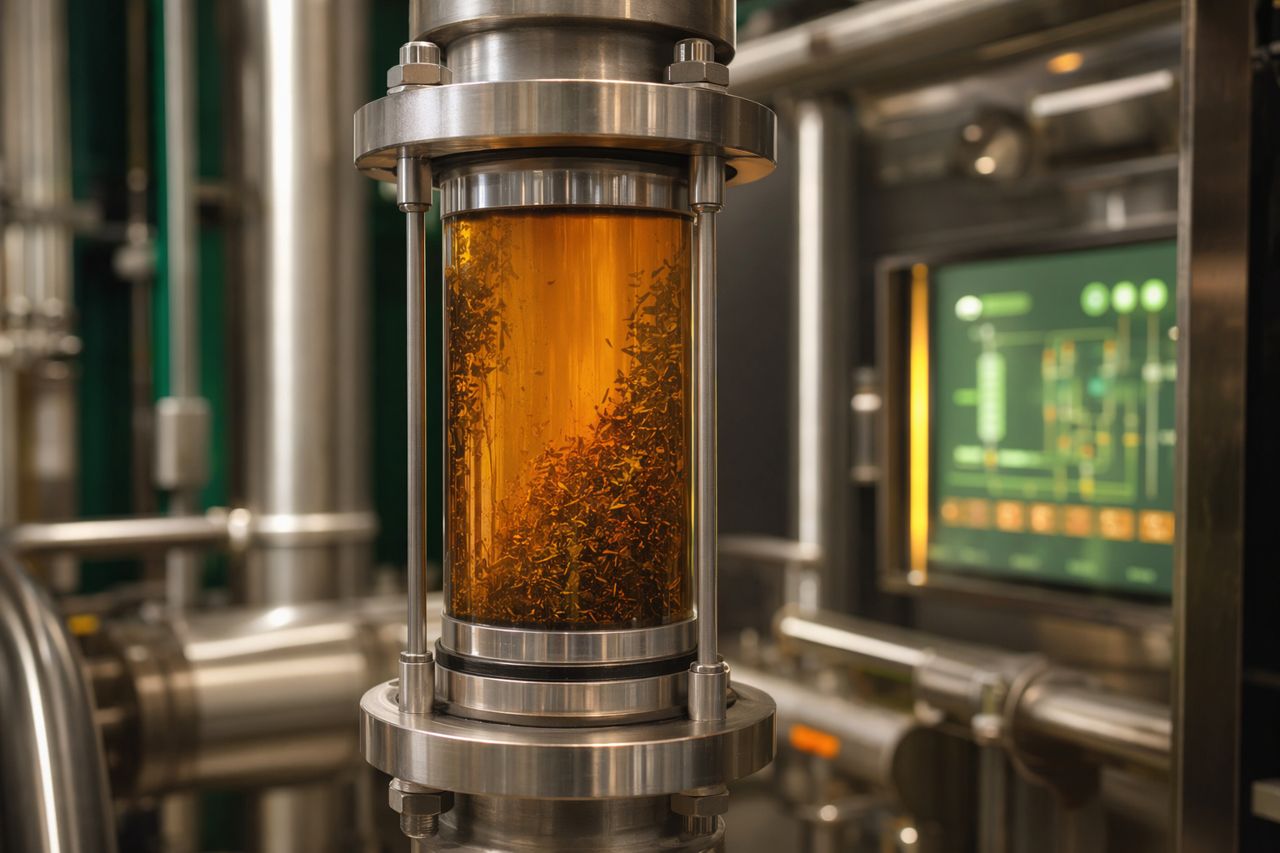
In an instant tea extraction plant, filtration is often where a good extraction run becomes a slow production day. Leaf fines carry forward. Pectin-rich solids hold water. Viscosity rises as extract concentration increases. Clarifiers, screens, decanters, membranes, and polish filters start doing more work than they were sized to do.
For extraction managers, the issue is not only filter life. It is throughput, yield recovery, cold-water solubility, final liquor clarity, evaporator loading, and the ability to hit the same extraction window shift after shift.
Enzymeready supports plants that need enzyme solutions built around these real operating constraints. As an enzyme supplier for tea extraction processing, we focus on practical outcomes: cleaner separation, lower process drag, improved extract handling, and more stable downstream performance.
Why filtration becomes the bottleneck
Tea extraction does not produce a simple liquid stream. It produces a dynamic suspension of soluble tea solids, colloidal material, leaf fragments, gums, pectin-like structures, and fine particles released during hot extraction, agitation, and transfer.
Bottlenecks typically build from several causes at once:
- Excess leaf fines from cut size variation, over-handling, or aggressive agitation
- High colloidal load that keeps small particles suspended instead of settling or separating cleanly
- Viscosity increase as soluble solids rise before concentration
- Pectin and hemicellulose contribution that can bind water and slow clarification
- Unstable extraction windows caused by raw material variation, seasonal leaf behavior, or inconsistent residence time
- Filter media blinding when fines and colloids form compressible cakes
- Carryover into evaporation or drying that affects fouling, color consistency, and powder solubility
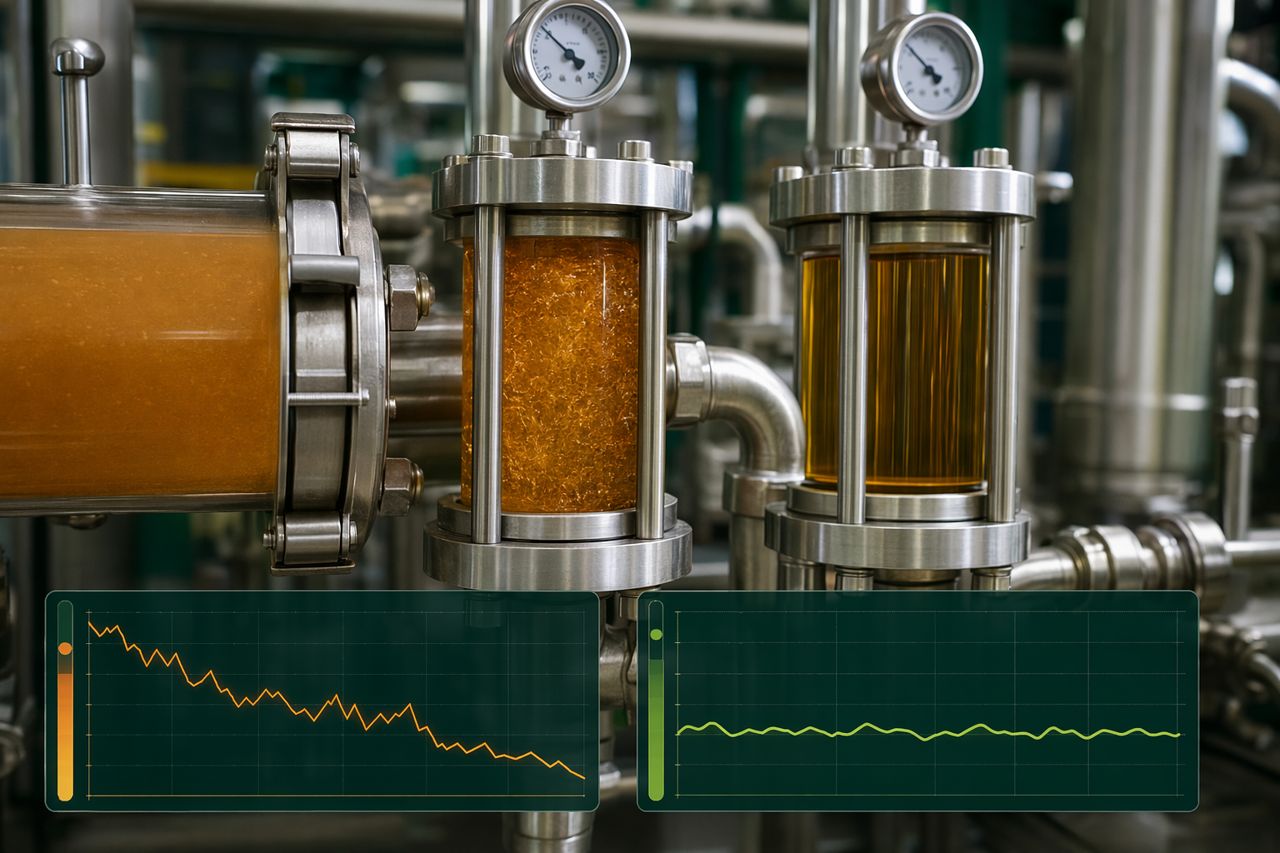
The result is familiar: rising pressure differential, reduced flow, more frequent filter changeouts, recirculation delays, and a production team forced to choose between yield recovery and line speed.
The hidden cost of pushing filtration harder
When filtration starts to slow, the first response is often mechanical: more pressure, more backwash, longer holding, tighter screens, additional polishing, or a process detour through auxiliary equipment.
Those actions may keep the batch moving, but they can also create new costs:
- Higher solids loss in spent leaf or filter cake
- Longer tank occupancy and reduced extraction capacity
- More rework when turbidity targets are missed
- Greater fouling load before evaporation
- More variability in spray drying behavior
- Inconsistent cold-water solubility in the finished powder
- Operator time spent managing symptoms instead of controlling the extraction window
In instant tea, filtration performance is rarely isolated. A slow filter can reduce the effective capacity of the whole plant.
Where enzymes can help in tea extraction processing
Enzyme treatment is not a substitute for good extraction design, raw material control, or separation equipment. It is a process tool used to reduce the burden placed on those systems.
The right enzyme approach can help modify plant-derived structures that contribute to viscosity, colloidal stability, and poor liquid-solid separation. In practice, that can support:
- Faster liquor release from extracted leaf
- Improved drainage through leaf beds or separation stages
- Reduced viscosity before clarification
- Lower suspended solids load entering filtration
- Clearer extract before concentration
- More consistent turbidity behavior across leaf lots
- Reduced filter blinding and fewer flow interruptions
- Better downstream handling into evaporation and drying
For buyers, the value is not the enzyme itself. The value is a more controllable extraction process with fewer hidden losses between leaf input and finished instant tea powder.
From leaf fines to viscosity: the process chain
1. Extraction releases more than soluble tea solids
During extraction, heat, agitation, and residence time pull desirable tea components into the liquor. At the same time, the process can release structural material from the leaf matrix. Fine particles and colloidal fragments remain suspended and may pass through early separation steps.
If these materials are not managed early, they travel downstream and load every piece of clarification equipment that follows.
2. Viscosity slows separation
As extract solids increase, viscosity can rise. Higher viscosity reduces settling behavior, slows flow through filter media, and can make cake formation more compressible. Even when the filter is technically capable, the liquor may simply not move through it at the required production rate.
Enzyme-supported conditioning can help reduce the viscosity contribution from selected plant structures, improving process flow without forcing harsher mechanical treatment.
3. Colloids affect clarity and solubility
Turbidity is not only a visual issue. Colloidal carryover can affect instant tea powder behavior, especially in cold-water applications where fast, clean solubility is expected. If insoluble or slow-dispersing material survives into drying, it can show up later as sediment, haze, or inconsistent cup appearance.
Better clarification before concentration helps protect both plant efficiency and final product quality.
4. Fouling multiplies downstream
Fines and colloids that pass filtration can increase fouling tendency in heat transfer equipment. Evaporators and concentration systems are particularly sensitive to feed quality. A small improvement in upstream liquor clarity can reduce cleaning pressure downstream and help stabilize production scheduling.
What extraction managers should measure
Before changing the process, define the bottleneck in production terms. A useful plant trial should track the same measurements operators already care about:
- Extract flow rate through primary and polishing filtration
- Pressure trend across filtration stages
- Time to reach target clarity
- Turbidity before and after clarification
- Soluble solids consistency before concentration
- Yield recovery from extracted leaf
- Tank hold time and queue delays
- Frequency of filter changeouts or cleaning events
- Evaporator fouling trend after upstream changes
- Finished powder solubility, especially in cold-water testing
The goal is to connect enzyme use to operating improvements that justify adoption: more liquor through the line, less production drag, and fewer quality deviations.
Choosing an enzyme supplier for tea extraction processing
Instant tea extraction is not the same as fruit juice, starch conversion, or general botanical processing. Tea brings its own balance of polyphenols, colloids, color sensitivity, aroma considerations, and solubility expectations.
When evaluating an enzyme supplier for tea extraction processing, look for a partner that understands:
- Hot extraction and staged extraction workflows
- The impact of residence time on color, flavor, and yield
- Clarification challenges caused by tea fines and colloids
- Viscosity control before concentration
- Cold-water soluble instant tea requirements
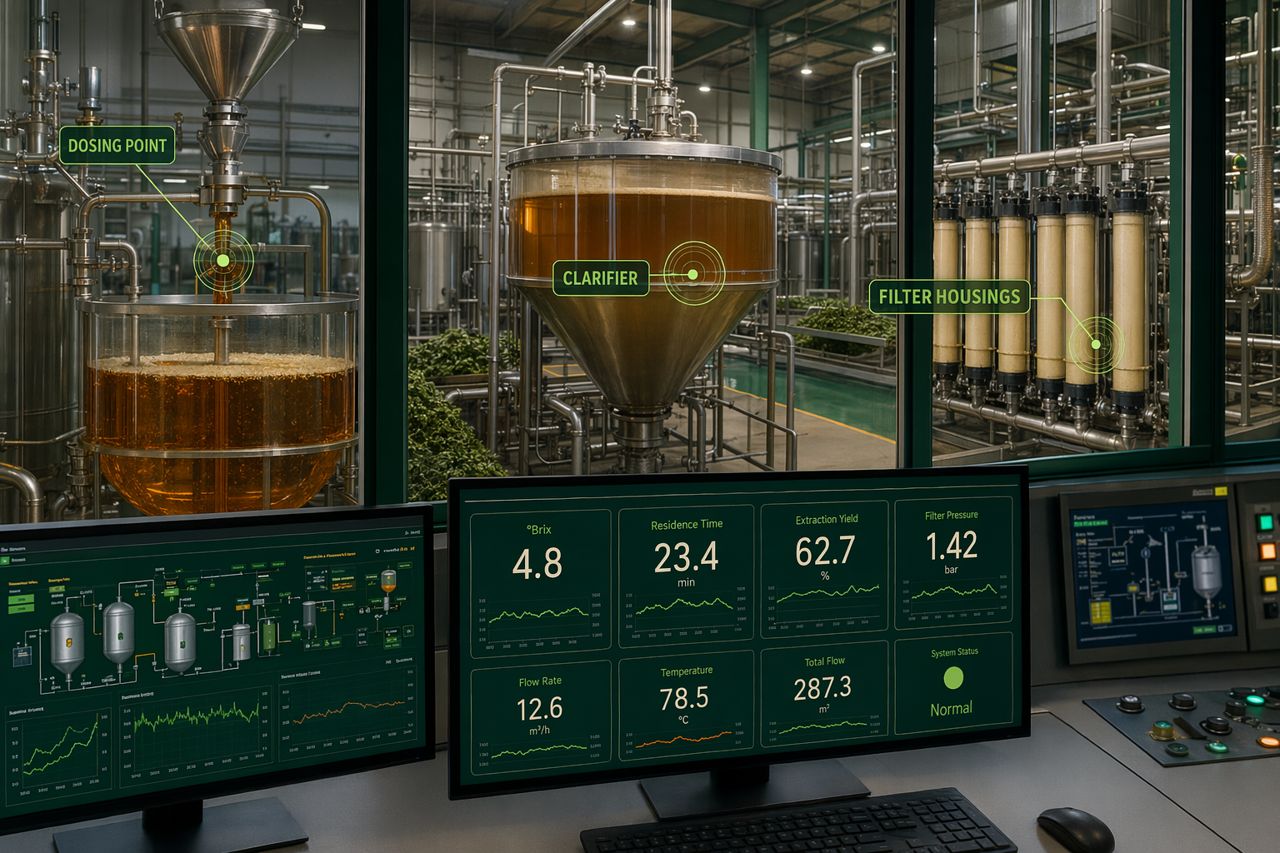
- Compatibility with existing tanks, dosing points, and separation equipment
- Plant trial design that compares performance against current production baselines
The right supplier should help you decide where enzyme conditioning belongs in your process, not simply recommend a product and leave the plant team to solve the rest.
Practical dosing-point considerations
Enzyme performance depends on where the treatment is introduced and how well it fits the extraction window. In many plants, the most useful placement is where contact time, temperature profile, and mixing are stable enough to deliver repeatable conditioning before separation.
Common evaluation points include:
- During extraction, when the leaf matrix is still open and hydrated
- After extraction, before primary separation, to support liquor release and drainage
- Before clarification, where viscosity and colloids are affecting throughput
- In a controlled side stream during pilot validation, before full-line adoption
The best location is plant-specific. It depends on the tea type, extraction sequence, equipment layout, target liquor quality, and where the filtration bottleneck is actually forming.
Signs your filtration issue is enzyme-addressable
An enzyme-supported approach may be worth testing if your plant sees:
- Good extraction yield but slow liquor separation
- Frequent filter blinding without a clear mechanical cause
- High turbidity after standard clarification
- Viscosity spikes that correlate with certain leaf lots
- Excessive solids loss when trying to improve clarity
- Evaporator fouling linked to upstream carryover
- Cold-water solubility complaints tied to haze or sediment
- Production delays caused by clarification rather than extraction capacity
These patterns suggest the issue may be connected to the structure and behavior of plant-derived materials in the extract, not just equipment capacity.
What a controlled plant trial should look like
A useful trial does not need to disrupt production. It should be scoped around a defined bottleneck and a clear comparison to the current process.
A practical trial plan includes:
- Baseline run: document current filtration flow, clarity, pressure trend, and yield recovery.
- Target selection: decide whether the priority is throughput, turbidity reduction, viscosity control, fouling reduction, or solubility improvement.
- Dosing-point test: evaluate where enzyme conditioning has the cleanest fit in the existing process.
- Side-by-side comparison: compare treated and untreated liquor under the same operating assumptions wherever practical.
- Downstream check: follow the extract into concentration, drying, and finished powder solubility.
- Operational review: confirm whether the benefit is repeatable, operator-friendly, and commercially meaningful.
The output should be a decision-ready view of process value, not just a lab observation.
Enzymeready approach
Enzymeready works with instant tea extraction plants that need cleaner, more repeatable separation without overcomplicating the process. We help identify where enzyme conditioning can reduce filtration load, improve extract clarity, and support stable downstream performance.
Our focus is plant-floor fit:
- Clear process objectives before recommendation
- Enzyme selection aligned with tea extraction conditions
- Practical dosing-point guidance
- Trial support based on production metrics
- Attention to color, clarity, yield, and cold-water solubility
- Scale-up thinking from the start
If filtration is limiting your instant tea line, the solution may not be a larger filter. It may be a better-conditioned extract entering the filter.
Request a quote
Tell us about your tea type, extraction layout, current filtration bottleneck, and target outcome. Enzymeready will help you evaluate an enzyme solution for your production window.